
Do Fish Oil Pills Work?
Some of us have bottles of fish oil pills in our refrigerators. We’re hoping these supplements, rich in omega-3 fatty acids, might reap big benefits for our hearts. But new research suggests, “Don’t bother.” Is the research right? Find out.

Do Fish Oil Pills Work?
An exhaustive analysis 1 of 20 previously published studies found that people (mostly heart disease patients) who increased their omega-3 fatty acid intake (mostly with pills, not food) did not lower their risk of major cardiovascular outcomes, including heart attacks, strokes, and death.
This isn’t the only time the benefits of omega-3s have been seriously questioned. Another meta-analysis2 also concluded that fish oil was no better than a placebo at preventing heart attacks, strokes, and other cardiovascular-related events.
So what’s going on?

Learn More About Pritikin
Food vs. Supplements
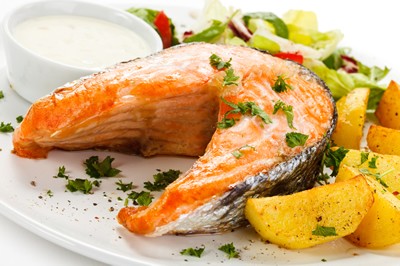
“Good data indicate that there does appear to be a protective effect of eating food, like salmon and sardines, that are rich in omega-3s, but the verdict is still out on the benefits of fish oil capsules, especially among people with no history of heart disease,” summarizes Kimberly Gomer, MS, RD, Director of Nutrition Research at the Pritikin Longevity Center.
Adds Kimberly Gomer, Director of Nutrition at Pritikin, “When reviewing this latest meta-analysis, we first need to ask: Were the omega-3 supplements that the subjects swallowed correcting a deficiency? Or were the pills simply added on top of an already adequate intake of omega-3-rich foods? As is the case with most nutrients, a supplement would most likely be beneficial only if people were deficient in the nutrient.”
Unfortunately, we do not know the pre-study omega-3 status of the subjects in the meta-analysis. It was never assessed and/or reported.
Over-Supplementation
The flip side, as past studies have found, is the dangers of over-supplementation. “Research has found, for example, that supplements of vitamins A and E (two vitamins that most Americans are not deficient in) can be harmful,” notes Gomer. Might the same be true of omega-3 supplements for people already well nourished with omega-3s? Possibly. We do know that too much omega-3 can cause blood thinning. There may be other problems. We don’t know for sure because the science, as yet, has not been done.
One concern is increased risk of atrial fibrillation, or Afib. Having Afib means you’re at greater risk of strokes and heart attacks.
A 2014 study 3 found that people with the highest intakes of omega-3s (as well as the lowest intakes) had the highest rates of Afib. Too much of anything is more likely to occur with pills, not food. The people in this study with the lowest risk of Afib were those consuming roughly the same amount of omega-3s found in the Pritikin Eating Plan’s guidelines of two to three servings of fish a week. This study was large. It followed more than 57,000 people from Denmark. But it was observational, which means it could pinpoint links between Afib and omega-3 intake, but not cause and effect. Randomized clinical trials are needed to better establish optimal ranges of omega-3 intake for protection against Afib.

Effects Of Prescription Drugs
It’s also important to realize that most of the studies in these meta-analyses showing that fish oil pills did not prevent heart problems were completed in the past two decades, a time when management of heart disease had improved tremendously because of new drug strategies. But these drugs, ranging from anti-platelets to statins to ACE inhibitors, tend to work along the same biological pathways that omega-3s do, that is, decreasing lipids, blood clotting, and inflammation. So it could be that adding fish oil pills to an already aggressive drug therapy is, well, redundant. The drugs are already delivering the benefits the fish oil would have provided.
That said, an eating plan like Pritikin, which recommends a healthy dose of omega-3 fatty acids naturally occurring in food, might have significant benefits for people who are not on aggressive pharmaceutical treatment.
American Heart Association Guidelines
The American Heart Association recently weighed in 4 on the question: “Do fish oil pills work?” Reviewing all randomized clinical trials that evaluated fish oils’ effects on cardiovascular disease, the AHA Science Advisory arrived at the following three conclusions:
1. Omega-3 fish oil supplements may be reasonable for patients who have had a heart attack.
2. Patients with heart failure may also benefit from supplementation with omega-3 fish oil.
3. However, there is a lack of evidence that omega-3 fish oil supplements prevent cardiovascular diseases in the general population.
Bottom Line: “Most of us are better off eating modest amounts of whole foods rich in omega-3 fats than popping fish oil pills,” states Dr. Tom Rifai, MD, FACP. Dr. Rifai is Regional Medical Director of Metabolic Health & Weight Management at Henry Ford Health System in Michigan and member of the Pritikin Scientific Advisory Board.
To determine if your daily omega-3 intake is sufficient, the Pritikin Program recommends the following:
-
First, assess your current fish intake.
You are likely consuming significant – and optimal – amounts of omega-3 fatty acids if you’re eating fish (3-1/2 to 4-ounce servings, 2 to 3 times a week), especially fish high in omega-3 content like salmon, sardines, herring, and trout.
-
Second, assess your current walnut and flaxseed intake.
If you’re consuming walnuts and flaxseeds every day, you may be consuming significant omega-3 fatty acids. But do keep in mind that nuts and seeds are very high in calorie density, so they’re not a good choice if you’re trying to lose weight. Fish (significantly lower in calorie density) is a better choice. Moreover, the benefits of omega-3 fatty acids from plant foods like nuts may not be the same as the benefits from fish.
No Magic Bullet
“And always keep in mind that no individual food or nutrient – whether it’s fish oil, Vitamin E, pomegranate juice, or anything else touted as ‘the latest and greatest’ – can ever match the benefits of an overall healthy food plan like Pritikin,” states Gomer.
Focus On Lifestyle, Not Supplements
“With a Pritikin lifestyle,” continues Gomer, “you’re not just getting omega-3s. You’re also dramatically increasing your intake of all heart-healthy foods, including fruits, vegetables, whole grains, and beans. Plus, you’re dramatically decreasing your intake of heart-damaging foods like red meat, full-fat dairy foods, and trans fats.
“All these dietary changes, plus regular physical activity, add up to profound – and proven – benefits.”
Fish oil is a small fry by comparison.

Get All the Details of a Stay at the Pritikin Center in Your Inbox
2Archives of Internal Medicine, 2012, 172: 686.
3Europace, 2014; 16 (11): 1554.
4Circulation, 2017; 135 (16): https://doi.org/10.1161/CIR.0000000000000482