
The Nutrition Habits That Matter Most for Long-Term Wellness
Sustainable nutrition change requires more than a meal plan. It requires re-learning food preparation, re-tuning taste preferences, re-building emotional relationships with eating, and practicing new habits long enough that they become automatic. That kind of transformation is extraordinarily difficult to achieve alone — which is precisely the gap a structured wellness program is designed to close.

Small Daily Choices, Lifelong Consequences
The food on your plate today is quietly shaping the body you’ll inhabit decades from now. Every meal is either an investment in long-term wellness or a withdrawal from it — and the science behind that statement has never been clearer. Research from a 30-year study published in Nature Medicine in 2025 found that the people most likely to reach age 70 free of chronic disease, with their cognitive, physical, and mental health intact, were those whose nutrition habits emphasized whole, plant-forward foods consistently over decades. Long-term wellness isn’t built in dramatic three-week diets. It’s built one ordinary breakfast at a time.
Yet despite mountains of nutrition research, most people feel more confused than ever about what to eat. Trendy diets contradict each other, social media amplifies misinformation, and the food environment is engineered to override willpower. The truth is that the nutrition habits proven to drive long-term wellness are remarkably simple, remarkably consistent across decades of peer-reviewed research, and remarkably hard to maintain without the right environment, education, and support.
That’s where a structured wellness intervention can change everything. At Pritikin, the Doral, Florida-based health and wellness retreat with nearly 50 years of clinical history, guests don’t just learn what to eat — they internalize the nutrition habits that drive sustainable long-term wellness, supported by physicians, registered dietitians, and a daily living environment built entirely around evidence-based wellness principles. The result is a transformation that goes far beyond a vacation. It’s a recalibration of the relationship between food, body, and long-term wellness.
This article unpacks the specific nutrition habits that matter most, the science behind why they work, and how an immersive program like Pritikin helps translate nutrition knowledge into lifelong wellness practice.
What “Long-Term Wellness” Actually Means
Long-term wellness is not the absence of illness, and it’s not a number on a scale. It’s a multidimensional state of physical, cognitive, emotional, and metabolic health sustained across decades. Researchers in the 2025 Nature Medicine analysis defined “healthy aging” using four distinct domains: living to 70 free of major chronic disease, preserving cognitive function, maintaining physical mobility, and sustaining mental health. People who scored highly across all four were the ones whose nutrition habits had remained whole-food-centered, plant-rich, and minimally processed over a period of 30 years.
Long-term wellness covers cardiovascular function (the heart’s ability to pump efficiently without arterial blockage), metabolic regulation (how well your body manages blood sugar and insulin), cognitive resilience (memory, focus, and protection against neurodegeneration), inflammatory balance (chronic low-grade inflammation drives nearly every age-related disease), gut health, hormonal stability, and emotional well-being. Nutrition habits are the single most modifiable lever influencing all of these systems simultaneously.
The contrast with short-term wellness is important. A crash diet can lower a number on the scale in two weeks. A weekend cleanse can produce a temporary glow. But long-term wellness requires nutrition habits that you can — and want to — sustain for the next 30 years. That distinction is everything.
The Core Nutrition Habits That Drive Long-Term Wellness
Decades of nutrition science converge on a remarkably consistent set of habits. These aren’t trendy. They’re foundational.
Build Meals Around Whole, Plant-Forward Foods
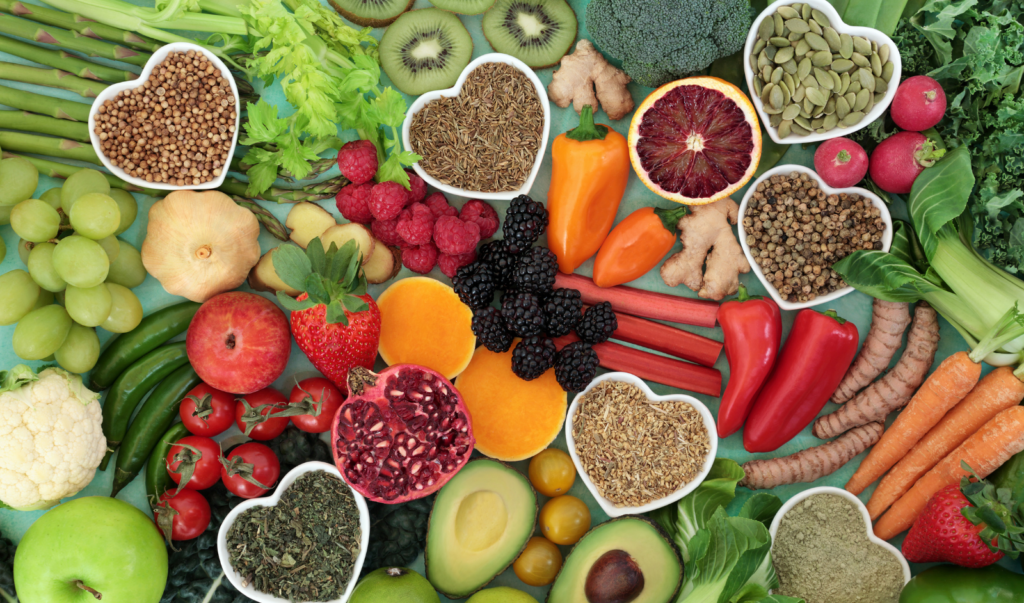
The most powerful predictor of long-term wellness in nutrition research is the proportion of your diet made up of minimally processed plants. A 2025 comprehensive review in Applied Sciences analyzing dietary patterns and longevity confirmed that Mediterranean, DASH, and plant-based diets — all of which emphasize vegetables, fruits, whole grains, legumes, nuts, and seeds — consistently produce reduced cardiovascular and all-cause mortality across diverse populations (Mediterranean and DASH research summary).
Whole foods deliver fiber, antioxidants, polyphenols, and micronutrients in a complex matrix that supplements cannot replicate. The nutrition habit of filling the majority of your plate with vegetables, fruit, and intact whole grains is one of the most reliably documented drivers of long-term wellness.
Drastically Reduce Ultra-Processed Foods
The same Nature Medicine longitudinal study found that higher consumption of ultra-processed foods was inversely associated with healthy aging — meaning the more processed food in someone’s diet, the less likely they were to reach 70 in good health (Nature Medicine, 2025). Ultra-processed foods — packaged snacks, sugary beverages, processed meats, refined baked goods — are engineered to be hyper-palatable, calorie-dense, and nutrient-poor. Building the nutrition habit of recognizing and dramatically limiting them is non-negotiable for long-term wellness.
Prioritize Fiber
Fiber is one of the most underconsumed nutrients in the modern diet, and it’s a workhorse for long-term wellness. Soluble fiber from oats, beans, lentils, fruits, and vegetables binds cholesterol in the gut, stabilizes blood sugar, feeds beneficial gut bacteria, and supports satiety. The nutrition habit of consciously including fiber-rich foods at every meal is one of the simplest, highest-impact wellness changes most people can make.
Limit Sodium, Refined Sugar, and Saturated Fat
The American Heart Association and decades of research consistently identify excessive sodium, added sugar, and saturated fat as primary dietary contributors to hypertension, type 2 diabetes, obesity, and atherosclerosis. Pritikin’s research-backed approach to smart nutrition choices for cholesterol reduction emphasizes naturally low-sodium, low-saturated-fat, low-added-sugar eating — and the cardiovascular results are documented in over 100 peer-reviewed studies.
Practice Mindful, Consistent Eating Patterns
Long-term wellness is also about how you eat, not just what. Eating mindfully, recognizing hunger and fullness cues, avoiding emotional or distracted eating, and maintaining consistent meal timing all support metabolic and psychological health. Pritikin addresses this head-on through resources on overcoming emotional eating through mindfulness, recognizing that nutrition habits sit at the intersection of body and mind.
Develop Cooking Skills
A 2022 study in Nutrients found that culinary education interventions produced significant long-term improvements in dietary patterns one year later (Culinary Education Long-Term Impact Study). Knowing how to prepare healthy food is one of the most underrated nutrition habits — without cooking ability, healthy eating depends entirely on what restaurants and prepared-food companies decide to sell you.
Build Habits That Survive Real Life
A frequently cited paper on theory-based dietary interventions found that the longest-lasting nutrition habit changes come from interventions grounded in self-efficacy, motivation, and behavior change theory — not just information. Knowing what to eat is not the same as eating it for 30 years. The bridge between knowledge and habit is structured, supported behavior change.
Why Most People Fail at Long-Term Nutrition Change
Research is sobering on this point. Most diet interventions show strong short-term results but weak long-term adherence. The reason isn’t laziness or weak willpower — it’s environment. Modern life is structured against healthy nutrition habits: convenience foods, marketing pressure, time scarcity, social eating norms, and an industrial food supply that engineers products to override satiety signals.
Sustainable nutrition change requires more than a meal plan. It requires re-learning food preparation, re-tuning taste preferences, re-building emotional relationships with eating, and practicing new habits long enough that they become automatic. That kind of transformation is extraordinarily difficult to achieve alone — which is precisely the gap a structured wellness program is designed to close.
How Pritikin Helps Build Nutrition Habits That Last
Pritikin is the only resort-based program with results documented in over 100 peer-reviewed medical journals — including the New England Journal of Medicine, Archives of Internal Medicine, and the American Journal of Cardiology. The center has spent nearly 50 years refining how to translate nutrition science into lasting habit change. Here’s what makes the approach uniquely effective.
An Immersive Environment Designed for Habit Formation
Behavior change research is clear: environment shapes habits more powerfully than willpower. The Pritikin experience creates a fully immersive setting where every meal, every snack, every learning opportunity reinforces evidence-based nutrition habits. Guests don’t have to fight their environment — the environment supports them.
Physician-Led, Multidisciplinary Wellness Care
The Pritikin Program integrates medical doctors, registered dietitians, exercise physiologists, behavioral psychologists, and culinary experts into a single coordinated team. Why this matters: long-term wellness is multi-system, and isolated nutrition advice without medical context can miss critical individual factors. Pritikin’s physician-led approach is a key reason the program is reimbursed by Medicare for Intensive Cardiac Rehabilitation in qualifying patients.
Hands-On Cooking Education
The Pritikin Cooking School teaches guests how to prepare delicious, nutrient-dense meals at home. Given the research showing that culinary skill is one of the strongest predictors of sustained dietary change, this is more than a luxury amenity — it’s a core mechanism for long-term nutrition habit formation.
Documented, Measurable Results
The Pritikin results speak for themselves: average 23% drops in LDL cholesterol in three weeks, 33% reductions in triglycerides, 9% drops in blood pressure, and significant improvements in inflammatory markers like C-reactive protein. These outcomes were published in journals including Atherosclerosis and Diabetes Care, and a five-year follow-up of heart-disease patients in the program documented sustained weight loss and cardiovascular improvement.
A Comprehensive Approach to Heart Health
For guests seeking heart-health-focused intervention, Pritikin offers extensive resources including guidance on reversing coronary heart disease through nutrition and seven simple habits to improve heart health. The program’s nutrition framework is detailed in a primer on the Pritikin nutrition program, giving guests a clear, science-based roadmap.
Education That Translates Into Lifelong Practice
Pritikin’s approach to teaching guests how to create healthy eating habits that last a lifetime is grounded in the behavior change research showing that information alone doesn’t drive habit change — but information combined with practice, environment, social support, and self-efficacy does. Guests leave with skills, not just knowledge.
A Luxury Setting That Makes Wellness Sustainable
Long-term wellness is hard to associate with deprivation. The Pritikin wellness retreat is built around the recognition that healthy living should feel restorative, pleasurable, and aspirational — not punishing. From spa services to fitness offerings to gourmet plant-forward cuisine, the experience teaches guests that vibrant nutrition habits are compatible with the best version of their life.
Why Pritikin Stands Apart in Wellness
The reason Pritikin works where so many other wellness programs don’t comes down to evidence and integration. Most wellness retreats offer relaxation; Pritikin offers measurable, clinically documented health transformation built on nearly 50 years of research. The program addresses how nutrition habits, fitness, and mental health combine — recognizing that long-term wellness is never about one habit alone. It’s about a coordinated lifestyle, learned in an environment designed to make it stick.
For guests seeking to understand how the program works in detail, Pritikin offers a transparent, structured roadmap that has guided thousands of guests through measurable, lasting change.
Begin Your Long-Term Wellness Journey
The nutrition habits that matter most for long-term wellness are simple to name and difficult to live alone. An immersive, physician-led environment changes that calculus entirely — turning evidence-based nutrition principles into automatic daily habits that travel home with you.To speak with a Pritikin representative about which program is right for you, reservations and personalized consultations are available at pritikin.com/book. The Pritikin team will walk you through program options, medical considerations, and the customized path most likely to deliver the long-term wellness results you’re after. Decades of nutrition science point to a clear set of habits — Pritikin is where those habits become a way of life.